Expert Pre-Configured DIY Power Systems
DIY Off-Grid Cabin Kits
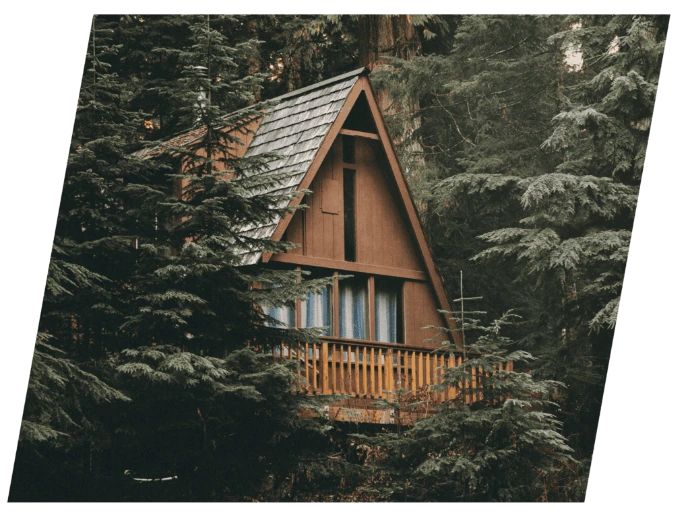
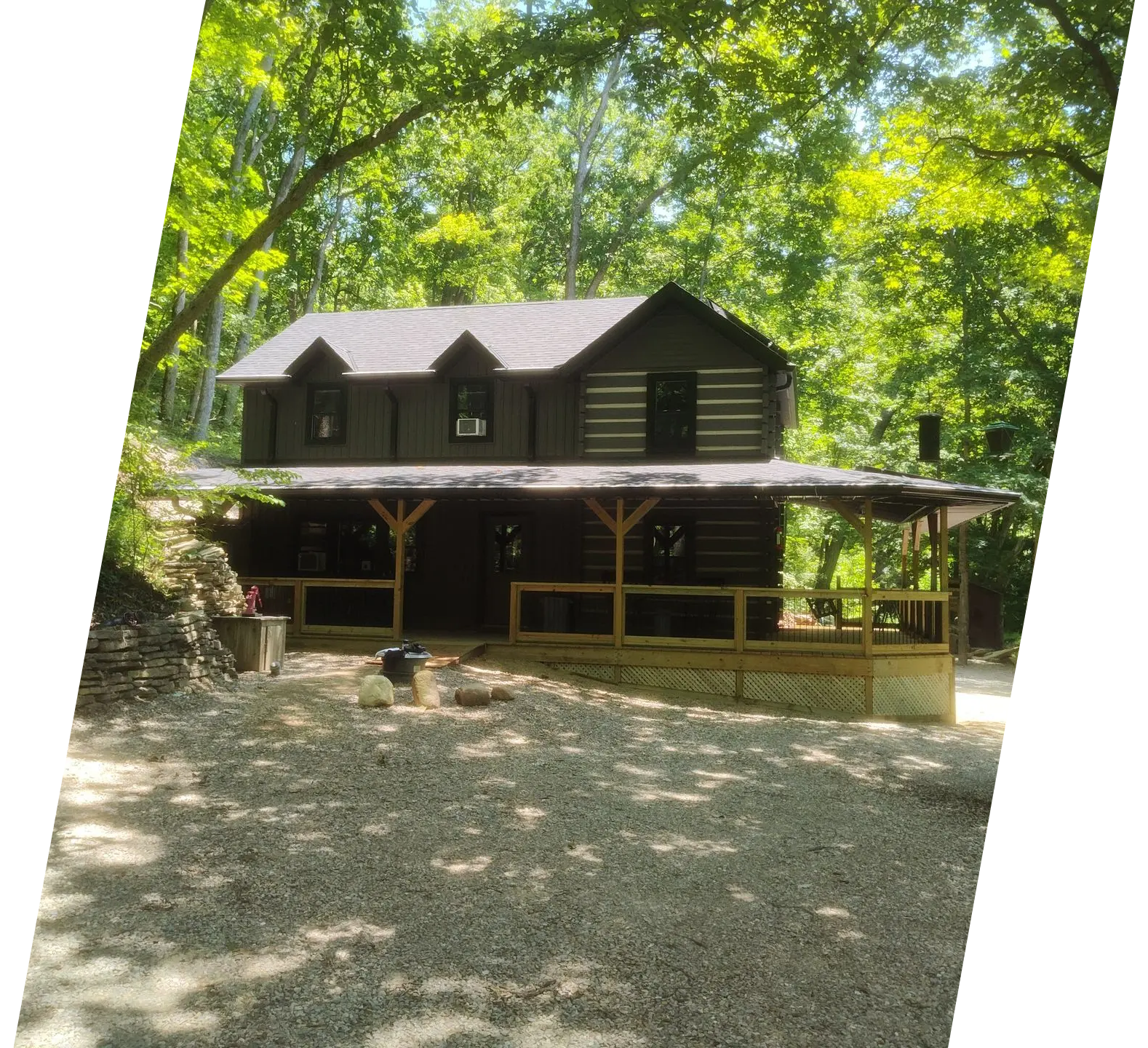
Easily add a complete off-grid solar power system to your cabin with our cabin kits. Install your own power system with advanced features such as inverter load balancing and pre-wired PV protection and disconnects. Enjoy a reliable, easy-to-use system without a long component selection and compatibility verification process.
Complete Off-Grid Power Systems
Complete Packages
Our cabin kits include the major components you need to provide power for your cabin, including batteries, inverters, solar panels and panel racks. *
- Energy Storage: Packages come with 10kWh or 20kWh of battery storage. Options for additional battery capacity are also available.
- Inverters: Victron inverters-chargers provide efficient AC power for your appliances with features such as load balancing in multi-inverter configurations.
- Solar System: With high-efficiency, bifacial solar panels and an easy to install ground mount, you harness more power from every ray of sunlight, extending your off-grid capabilities.
*Cables, lugs, and other installation accessories are required but not included.

RELAX . RECHARGE . REPEAT
DIY Installation
Each cabin kit provides the components you need to provide power for your cabin's main breaker panel. Each kit includes a wiring diagram and installation guide developed from our experience designing and installing custom off-grid power systems.
- Plan Your Layout: Determine the placement of each component and the required wiring lengths. Prepare and supply your own wires, cable, terminations based on your needs.
- Install: Follow the wiring diagram to wire each component. The wiring diagram specifies the required wire gauge and fuses.
- Programming: Use the installation guide to configure your system, update firmware and enable remote management.
Compare Kits
FEATURES
SMALL CABIN KIT DD
Minimalist living with enough power to run two small appliances
simultaneously. I.e. Microwave, coffee maker, lighting, mini fridge, water pump
from above-ground water storage.
Single Inverter-Charger
3000VA / 2400W / 120V
Battery charging + inverter power
120V Output
Up to 2400W
Single Solar Controller
8x ~450W Bifacial Solar Panels
Ground Mount Array
Up to 3600W Total
2x 48V 100Ah
LiFePo Batteries
10kWh Battery Capacity
Starting at $9,500
SMALL ENHANCED CABIN KIT
Adds ability to use standard fridge, shallow well pump, window air
conditioner, furnace blower.
Single Inverter-Charger
5000VA / 4000W / 120V
Battery charging + inverter power
120V Output
Up to 4000W
Single Solar Controller
12x ~450W Bifacial Solar Panels
Ground Mount Array
Up to 5400W Total
2x 48V 100Ah
LiFePo Batteries
10kWh Battery Capacity
Starting at $11,500
MEDIUM CABIN KIT DDDDD
Adds
240V capability for
larger well pumps, small machinery, mini-split heat
pumps.
Dual Inverter-Chargers
3000VA / 2400W / 120VBattery charging + inverter power
Total: 6kVA 120/240V
Split-phase balancing
120V & 240V Output
Up to 4800W
Single Solar Controller
24x ~450W Bifacial Solar Panels
Ground Mount Array
Up to 10,800W Total
4x 48V 100Ah
LiFePo Batteries
20kWh Battery Capacity
Starting at $20,500
MEDIUM ENHANCED CABIN KIT DDDDD
Our most frequently sold configuration - Adds ability to run larger
kitchen appliances such as induction cooktops, electric oven, deep well pump
when loads are managed.
Dual Inverter-Chargers
5000VA / 4000W / 120V
Battery charging + inverter power
Total: 10kVA 120/240Vsplit-phase balancing
120V & 240V Output
Up to 8000W
Dual Solar Controllers
40x ~450W Bifacial Solar Panels
Ground Mount Array
Up to 18,000W Total
8x 48V 100Ah
LiFePo Batteries
40kWh Battery Capacity
Starting at $35,500
Applications
Monitoring Device with Touchscreen Included
Solar
Pricing
Batteries
LARGE CABIN KIT DDDDD
All the comforts of home.
Dual Inverter-Chargers
10000VA / 8000W / 120V
Battery charging + inverter power
Total: 20kVA 120/240V
Split-phase balancing
120V & 240V Output
Up to 16000W
Dual Solar Controllers
40x ~450W Bifacial Solar Panels
Ground Mount Array
Up to 18,000W Total
8x 48V 100Ah
LiFePo Batteries
40kWh Battery Capacity
Starting at $38,000
Frequently asked questions
Here are some common questions about our cabin kits.
In Northern climates with Winter snowfall, having solar as your primary means of energy generation becomes problematic. You don't want to be climbing on the roof to remove snow from your solar panels! For the rest of the year, cleaning leaves, dust, bird droppings, etc. is much easier on the ground than working on the roof.
In residential neighborhoods, solar panels are usually installed on the roof because neighborhood lots done have enough room for ground-mounted solar arrays and most HOAs and local zoning regulations don't allow for ground-mounted arrays. But, since the homes are connected to the grid, having snow and ice cover the solar panels on the roof is less of a problem.
We can work with you to modify a package or create a customized design for roof-mounted solar panels if that is your preference. Please email or call Off-Grid Power Systems for more details.
No, it is not true, but there's a lot more to it than that. First, there are multiple categories of "lithium" batteries; lithium ion and lithium metal.
Lithium ion batteries use a graphite (or silicon-carbon) anode where lithium ions intercalate — they slot in between the carbon layers during charging. The lithium is always in ionic form, never plating out as metallic lithium under normal operation.
Lithium metal batteries use a pure lithium metal anode. This gives much higher energy density but comes with serious safety challenges (dendrite formation, reactivity). Solid-state batteries being developed now often fall into this category.
LiFePO4 (lithium iron phosphate): Lithium-ion. The "lithium" in the name refers to the lithium ions moving between the iron phosphate cathode and the graphite anode. It's one of the most thermally stable li-ion chemistries, which is why it's popular in stationary storage and marine/RV applications.
NMC (lithium nickel manganese cobalt oxide): Also lithium-ion. Higher energy density than LFP, but less thermally stable — the nickel content is what pushes energy density up but also introduces more thermal runaway risk compared to LFP.
Every type of lithium chemistry batteries have a battery management system (BMS) that protects the cells inside the batteries from overcharging, undercharging, high & low temperature charging, etc.
The practical takeaway is ALL lithium batteries sold and installed by Off-Grid Power Systems are lithium iron phosphate batteries with BMS's which makes the likelyhood of any issues vanishingly low. In short, any lithium battery we recommend, sell, or install will be safe for you and your family.
The specifics of each installation is unique and will require different lengths of wiring between some devices and others. For example, the solar array could be located 20 feet from the building or 200 feet.
We do provide a list of recommended supplies and where to obtain them. That will save you a lot of time having to research where to purchase them. You will just need to determine the quantities you need. Most supplies can be purchased on Amazon or your local electrical supplier.
Short answer: We'll tell you what you need!
Complete answer: All kits, packages, or bundles designed for DIY installation will come with two things: detailed wiring schematics and a list of specific supplies and where to buy them in small quantities.
We will make sure you are successful in your installation, one way or another.
Energy has to come from somewhere; solar panels, wind, hydroelectric, or fossil fueled generators. We store this collected energy in batteries so the energy can be used anytime. However, the sun doesn't always shine and the wind doesn't always blow. In a typical residential solar system, the house is connected to the grid, so during periods of no sun, the needed energy can be supplied by the grid.
Not so with off-grid energy systems. We need to generate everything needed on site. So, for year-round use a means of backup power is needed, and for most customers this comes in the form of a backup generator powered by gasoline, diesel, propane, or natural gas.
Every one of our kits can be paired with a backup generator. If the generator is a standby generator, then it can easily be controlled (started and stopped) from the GX controller included in every cabin kit. It's even possible to control some portable generators, but that's hit-and-miss. Honda generators - the gold standard of portable generators - can be automatically controlled. Most of the inexpensive generators purchased at places like Harbor Freight, Costco, Sam's Club, etc. cannot. If you want to guarantee power is always available, whether you are present or not, then a standby generator with 2-wire start capability is what you want; not a cheap portable generator. If you don't care if you lose power for a couple of days due to bad weather when you are not at the cabin, then a portable generator is a cost-effective means of backup power.
If you have any questions about this, please email or call us and we're happy to answer your questions.
The very first step in off-grid power isn't how to provide off-grid power. The first step is becoming as energy efficient as practical. For example, if you want to heat water using electricity, don't use a standard electric water heater from the home store. You want a hybrid electric water. The hybrid refers to the water heater having both a heat pump and an electric heating element for backup. A heat pump water heater uses FAR less power and energy over time than a traditional water heater. The other alternative is to use a propane or natural gas water heater to reduce electrical consumption.
For an all-electric cabin, don't use a traditional electric range. Instead, use a range that has an electric induction cooktop with an electric oven. If you want a hot-tub at your cabin, use a heat pump spa heater rather than just an electric heating element.
By reducing the amount of electrical energy needed in the first place, you will saves thousands of dollars on the cost of your off-grid power system. Put simply, you will either spend the money on extra solar panels, batteries, and inverters or on energy efficient appliances. So do your part to conserve energy, reduce reliance on fossil fuels, and save money at the same time. The Earth, your grandkids, and your wallet will all thank you.
Our Work
Check out what's new in our company !
We Can Help You Design, Plan, And Install Any Off-Grid Power System For Your Recreational, Specialty Or Work Vehicle, Boat, Or Off-Grid Building.